Because my father was a career Marine, I grew up on military bases in Southern California, where during the war years between 1967 until sometime in 1970, I watched troops of new recruits assemble for embarkation to Vietnam. They were mustered at the LTA (‘Lighter-Than-Air’) Station in Tustin, CA, on which were two immense hangers full of helicopters—except on those occasions when the new troops were to be shipped out. Continue reading “Gift Horse”
Author: Brad Crenshaw
I am a poet and literary critic. I have published four books of poetry: 'Chased by Lunacies and Wonders', 'Memphis Shoals', 'Genealogies', and 'My Gargantuan Desire.' The first book on this list, 'Chased by Lunacies and Wonders', won the 2023 Catamaran Poetry Prize, and can be purchased by using this link: https://catamaranliteraryreader.com/subscribe-donate/chased-by-lunacies-and-wonders
The book is also available on Amazon. The other three books on the list are published by Greenhouse Review Press, and are also available on Amazon. I have published two chapbooks as well: 'Limits of Resurrection', and 'Propagandas'.
I have worked as a neuropsychologist for many years in a New England tertiary care medical center, and in the Massachusetts Department of Developmental Services. 'Medical Life' reflects my encounters with people who have had neurological insults of various sorts, and the problems that result.
When I am not writing, or working, I'll be out in my ocean kayak in either the Pacific or Atlantic Oceans. The unconstructed world.
It Occurs To Me That
as we enter the summer season of blockbuster movies and special effects, we might appreciate the violent history of a little known skirmish in early American history
The Persistence of Poetry
I have just returned from the 2015 AWP Conference, along with the other 12,999 writers, publishers and editors who likewise attended the 3-day event in Minneapolis. In my shady past, I have visited neuroscience conventions that had maybe twice that number of attendees, drawing as they did on a world-wide community of neuroscientists. But 13,000 people from the continental US conjoined around one loosely defined discipline was impressive. Hotels city-wide were totally booked. Restaurants everywhere were packed. And given the bacchanal nature of writers, the pubs were over-flowing. Continue reading “The Persistence of Poetry”
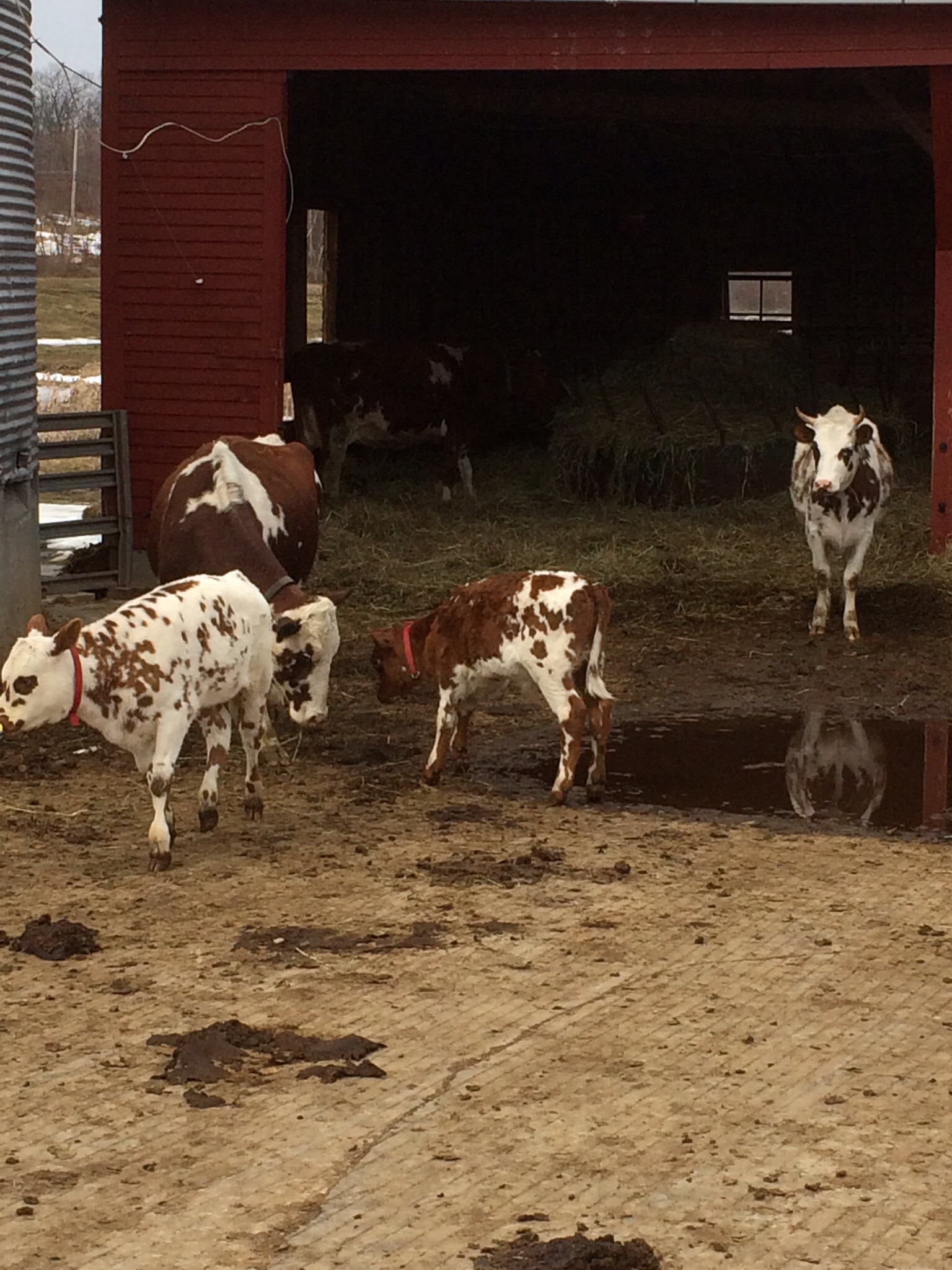
Easter at the Willow Brook Dairy
Please descend with me, you sentimentalists
and pilgrims, through our temperate grange smelling
of the vegetation, with the gravid
mare turned out among the strewing herbs,
which have their own names in French, and with our wedge
of day before us. There are so very many
different graduations of vitality
in life that logically it’s hard to say
where death exists. The risen Christ, we’re told,
appeared unto the Magdalene while looking
like a gardener. That’s hard to credit, but
I’m pleased to be here, hat in hand, among
the opiate philosophies, and seeing
how the windmill spins, the lister rusts
in Elam’s primeval barn. Continue reading “Easter at the Willow Brook Dairy”
It Occurs To Me That
in this season of unlikely miracles, we might enjoy the occasion to add to our concepts of spirituality:
FAT SPEAKS
Unlike the mirroring eyes, the pom pom heart,
I’m opaque, an oaf with no taste for driven individuation.
I’m blamed a lot these days,
I dumb down your cheekbones,
I assuage your nerves, calmed with my myelin sheathes,
your cells are founded upon my lipids. Continue reading “It Occurs To Me That”
It Occurs To Me That
this might be the perfect season to display Emily Dickinson’s talents as a nature poet—for which she is not often overtly credited. She seems at times to have required of herself a very particular scrutiny of the natural world outside her bedroom window—which allowed her to identify what she was watching, without ever naming it. And since, of course, none of her poems have titles, there are no clues to be found there either.
So the three poems I am offering are, therefore, riddles. Because we can see what she herself saw, you will have to attend to the evidence as she presents it, and arrive by inductive steps at your own recognition. The first one is easy (or should be): Continue reading “It Occurs To Me That”
It Occurs To Me That
we might all enjoy an accidental rendezvous, a chance encounter that adds to our day, and so, with that in mind, here is a poem by Aracelis Girmay, from her collection Kingdom Animalia:
ZEWDIT
Because she has a name
in the book of my family, the book
of my father’s brain & chest,
because everyone who looks
at the old photograph of the birdish
& beautiful child always says
the same thing: Zewdit.
I believe I have an aunt named Zewdit Continue reading “It Occurs To Me That”
Vital Signs
In a memorable volume of Parnassus, Annie Dillard writes about contemporary poetry that “it is the native tongue of nobody. As a language it is useless for important messages. It is arcane and luxurious. It amounts to a secret code. Only the people who speak it think it can save the world.” Part of her observation–the incomprehensibility of poetry– is by now a commonplace among critics and readers alike. But I’m interested in the discrepancy she indicates between this obscuring secrecy and the social power that poetry is expected to wield. There is a remarkable disparity between the modest aims of individual lyric poems–they capture the ineffable, the momentary illumination, the fragile beauty–and the grandiose ambitions of poetry and poets in general. Shelley claimed that poets were “the institutors of laws, and the founders of civil society, and the inventors of the arts of life.” Whitman maintained he was the voice of the people (who preferred Longfellow), and Pound was nearly shot for elevating poetry and the arts over the economic interests he thought were at the root of war and of the universal dissolution of culture. Of course, he was broadcasting his opinions over the Italian radio at the time. If he had been anything other than a poet, which is to say if his prosecutors had taken either him or his ideas seriously, he would certainly have been executed as an example to the nation. Instead, they locked him up in St. Elizabeth’s Hospital–the “bug house,” as he called it. So much for power. Continue reading “Vital Signs”
Market Day in Santa Cruz
Along the thoroughfares
approaching town, astrologers were offering
to read the stars, already confident
in Sarah, Goddess of Fruit-Bearing Trees,
according to their zodiac, though she
was humanly stricken by the troubadours
intoning hymns, and blowing flutes
on every corner of the market square all
the time, constantly. In cages, parrots
praised the red day. Continue reading “Market Day in Santa Cruz”
Body Image
At two in the morning one summer day in 1983, in Cambridge, Frank Bidart asked me to telephone the nearby Seven-Eleven to order a grinder, and just tell them it was for Frank. I don’t recall what kind of grinder that turned out to be, except that it consisted of some nondescript meat covered in onions and peppers. It reminded me of something you might get in a parking lot during a Red Sox game–if you were crazy about the Red Sox. Even then I was impressed by the implications here: a. that whoever was at the Seven Eleven knew which ‘Frank’ this would be who called at 2 a.m. to ask for a grinder; b. that Frank knew the guy would know him; c. that both of them knew what sort of grinder was called for. There were no questions asked on either side. It meant, of course, that Frank ate like this, at this hour, all the time. Continue reading “Body Image”
 Blue Islands, Blue as Ink